Dubai’s industrial property market is evolving alongside trade, e-commerce, and advanced manufacturing. For businesses seeking operational premises and investors assessing income-producing assets, Warehouses for Sale in Al Qusais deserve careful consideration. This established district provides infrastructure and routes connecting Dubai with Sharjah.
Buying a warehouse involves more than choosing sufficient floor space. Ownership eligibility, permitted activity, power supply, vehicle access, building condition, and long-term operating costs can determine whether an acquisition meets its objectives. This guide explains how to evaluate Al Qusais opportunities.
Why Consider Al Qusais for Warehouse Ownership?
Al Qusais is positioned in northeastern Dubai near the Sharjah border. Its districts accommodate workshops, storage facilities, and commercial units. Proximity to Sheikh Mohammed Bin Zayed Road (E311) supports journeys across Dubai and into neighbouring emirates, while Dubai International Airport provides an important reference point for businesses connected to air freight.
The area’s established commercial character is relevant to buyers who prefer an operating industrial neighbourhood rather than an entirely new development. Businesses can assess nearby services, labour access, delivery routes, and the practical demands of moving goods through busy streets. Assess individual buildings: narrow access roads may restrict truck circulation.
Understanding Al Qusais Industrial Areas 1–5
Buyers researching Al Qusais Warehouses for Sale should compare the five industrial sub-areas instead of treating Al Qusais as a single, uniform market. Industrial Areas 1 through 5 contain different combinations of warehouses, workshops, offices, and commercial activity.
The best location depends on traffic, neighbouring uses, and access. A distribution operator may prioritise straightforward vehicle access, whereas a workshop may give greater weight to permitted machinery, electrical capacity, and customer accessibility.
Before arranging an inspection, request the plot location, approved property use, building drawings, and an accurate floor-area breakdown. These documents help distinguish suitable sites from attractive listings.
Types of Commercial Warehouses in Al Qusais
Searches for Commercial Warehouses Al Qusais can cover very different property configurations. Understanding their purpose improves shortlisting.
- General storage warehouses: Designed for inventory, equipment, merchandise, and stock management, subject to approved storage activities.
- Logistics and distribution facilities: Prioritise loading access, internal circulation, racking potential, and proximity to transport links.
- Manufacturing or workshop premises: May require appropriate zoning, ventilation, electrical connections, and safety approvals.
- Warehouses with offices: Combine storage or operational space with administration, staff facilities, and customer coordination.
- Mezzanine-equipped units: Offer additional usable space, provided the mezzanine is approved and its load capacity suits the intended activity.
- Insulated or cooled warehouses: Support certain temperature-sensitive operations, although buyers must verify system capabilities rather than assume specialist cold-storage performance.
Versatility does not establish legal approval; confirm permitted uses.
Warehouse Specifications That Influence Long-Term Value
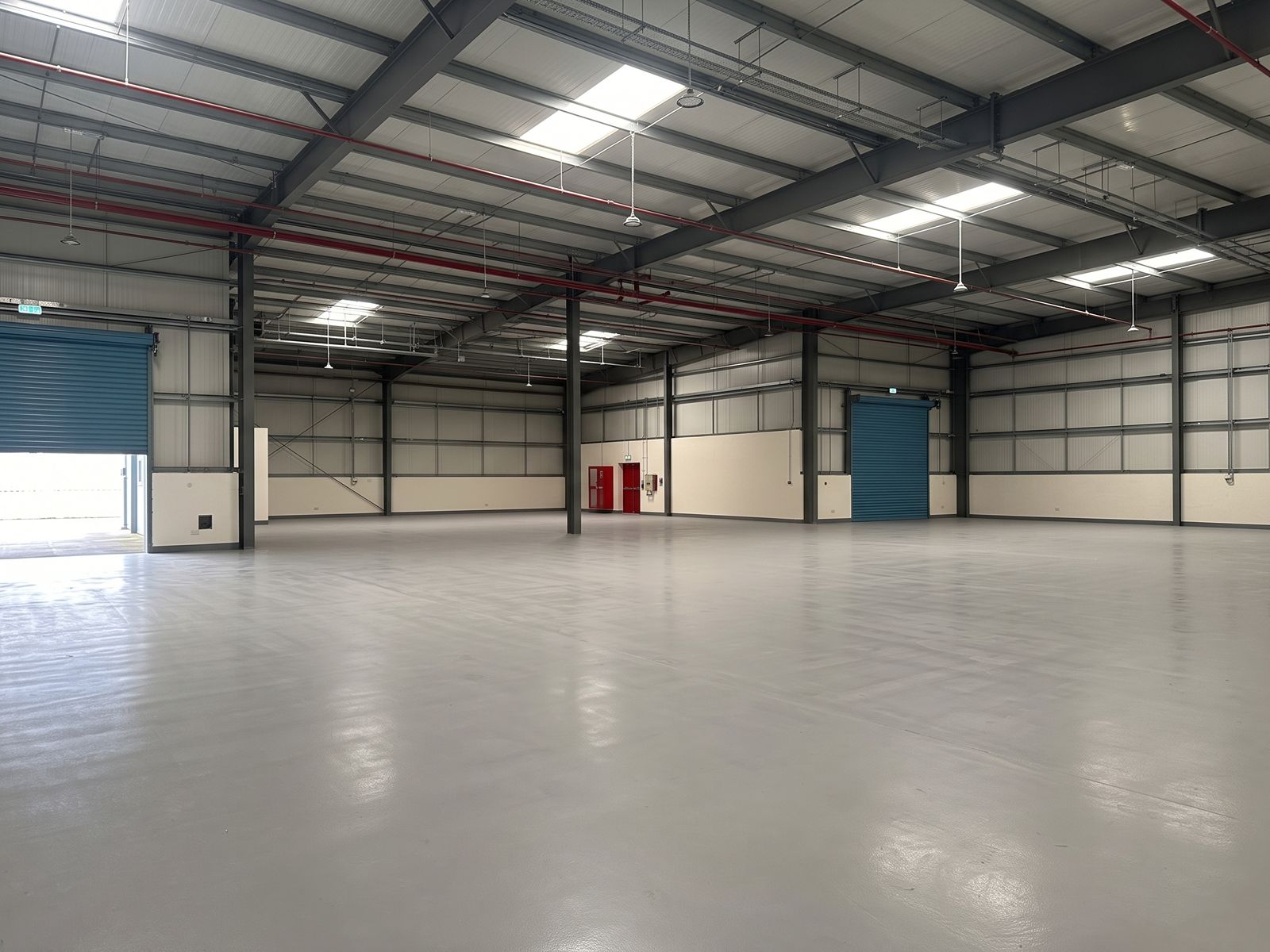
When comparing Warehouses for Sale in Al Qusais, square footage alone rarely tells the complete story. Technical features determine usability and adaptability.
Built-up area and layout: Compare the plot size, covered warehouse space, offices, mezzanines, and genuinely usable storage area. Request approved drawings and clarify what is included in the advertised measurement.
Ceiling height and floor loading: High clearance can improve racking efficiency, while floor strength affects equipment and pallet-storage options. Verify measurements and engineering limits.
Power and climate control: Confirm the connected electrical load, opportunities for upgrades, ventilation, insulation, and cooling arrangements. A manufacturing tenant may need a very different specification from a general storage operator.
Loading and vehicle access: Inspect shutter dimensions, loading positions, turning space, parking, and the practicality of deliveries during peak periods. Good road proximity is less valuable if trucks cannot manoeuvre safely.
Safety and condition: Review fire-protection equipment, maintenance records, water ingress, drainage, roof condition, and the status of required approvals. Technical inspections can reveal costly issues.
Buy Warehouse in Al Qusais: A Practical Due-Diligence Checklist
Anyone planning to Buy Warehouse in Al Qusais should verify legal and commercial fundamentals before paying a deposit. Start by requesting evidence of the seller’s authority, the title deed or relevant property-right documentation, and details of any mortgages, encumbrances, existing leases, or outstanding obligations.
Ownership is critical. Dubai permits foreign freehold ownership in designated locations, but buyers must not assume that every industrial plot in Al Qusais qualifies. Eligibility can depend on the exact property, the buyer’s status, and the rights being transferred. Obtain confirmation from the Dubai Land Department and appropriate legal advisers.
Next, check the intended business activity against applicable licensing and planning requirements. Review municipal permissions, fit-out approvals, Dubai Civil Defence requirements, and any restrictions affecting hazardous materials or industrial processes. Estimate transaction expenses, renovations, utilities, insurance, and maintenance.
Warehouse Investment Al Qusais: Measuring Real Returns
For investors, Warehouse Investment Al Qusais requires a disciplined comparison of income potential, property quality, and risk. Begin with evidence of achievable rent for comparable buildings, not just advertised asking rents. Consider location, warehouse specifications, lease terms, tenant obligations, and the time required to secure an occupier.
Gross rental yield is calculated by dividing annual rental income by the purchase price and multiplying by 100. Net yield offers a more realistic view because it accounts for relevant ownership expenses and periods without rental income. Acquisition costs and capital improvements should also be considered when assessing the total investment.
Tenant quality also matters. Review lease duration, payment arrangements, maintenance responsibilities, and the suitability of the premises for future tenants. An unusual layout may serve one operator perfectly yet limit the pool of businesses willing to lease it later. The aim is resilient performance, not simply a persuasive headline yield.
Buyers comparing Industrial Property for Sale Dubai should evaluate Al Qusais alongside alternative industrial locations using consistent assumptions. The strongest investment aligns legal structure, costs, utility, and tenant demand.
Future-Ready Warehouses: Technology, Efficiency, and Flexibility
The next generation of industrial property will increasingly be assessed for adaptability. E-commerce fulfilment, inventory visibility, automated stock handling, and data-led operations can change how businesses use warehouse space. Buyers should therefore consider whether a property can support modern warehouse-management systems, reliable connectivity, barcode tracking, and appropriately designed racking.
Energy efficiency is another practical consideration. Insulation, efficient lighting, well-maintained cooling, and sensible operational layouts may reduce running costs. Where feasible and permitted, buyers can also investigate future electrical upgrades and energy-monitoring systems.
Improvements do not guarantee returns. Their value depends on the business model, upgrade expense, regulatory permissions, and eventual tenant requirements. Flexible buildings with documented approvals may accommodate changing needs.
How to Choose the Right Warehouse for Your Business
Start with a written operational brief covering required floor area, power, clear height, loading frequency, working hours, staff facilities, and future expansion. Shortlist properties meeting essential criteria. During site visits, test truck access, inspect plant and equipment, and compare actual conditions with the advertised specifications.
For investment purchases, request occupancy information, current lease documentation, and evidence supporting the proposed rental assumptions. For owner-occupiers, calculate the total cost of ownership against the cost and flexibility of continued leasing. Independent advice helps identify risks before commitment.
Frequently Asked Questions
Are warehouses available for sale in Al Qusais?
Sale opportunities may arise, but availability varies. Verify current stock and ownership documentation with a qualified commercial property adviser rather than relying on rental advertisements.
What warehouse features should buyers prioritise?
Focus on approved use, usable area, power capacity, ceiling clearance, loading access, building condition, and fire-safety compliance. Priorities differ by operational activity.
Can foreign nationals buy warehouses in Al Qusais?
Do not assume unrestricted freehold ownership. Foreign ownership depends on designated areas and the particular rights attached to the property. Check eligibility with the Dubai Land Department.
Is buying better than renting an industrial warehouse?
Buying may support long-term control, while renting can preserve flexibility and capital. Compare total ownership expenses, financing, business plans, and relocation needs.
What affects warehouse investment returns?
Acquisition cost, achievable rent, vacancy, tenant quality, maintenance, lease conditions, and resale demand all influence performance. Assess both gross and net returns.
Conclusion
Warehouses for Sale in Al Qusais can appeal to buyers seeking an established industrial setting with access to Dubai’s wider commercial network. Successful purchasing depends on more than location or price: buyers should prioritise legally verifiable ownership, approved use, practical specifications, reliable logistics access, and realistic financial assumptions.
For operational or investment purchases, structured reviews support informed decisions. Choose a warehouse that works efficiently today and has the flexibility to remain relevant as industrial operations evolve.